The Old Power Plant on the River, and What It Became
The Durango electric generating plant, built in 1904 on the Animas River, operated as the city's power source for decades and was converted into the Powerhouse Science Center, preserving the original turbine hall as an exhibit and event space.
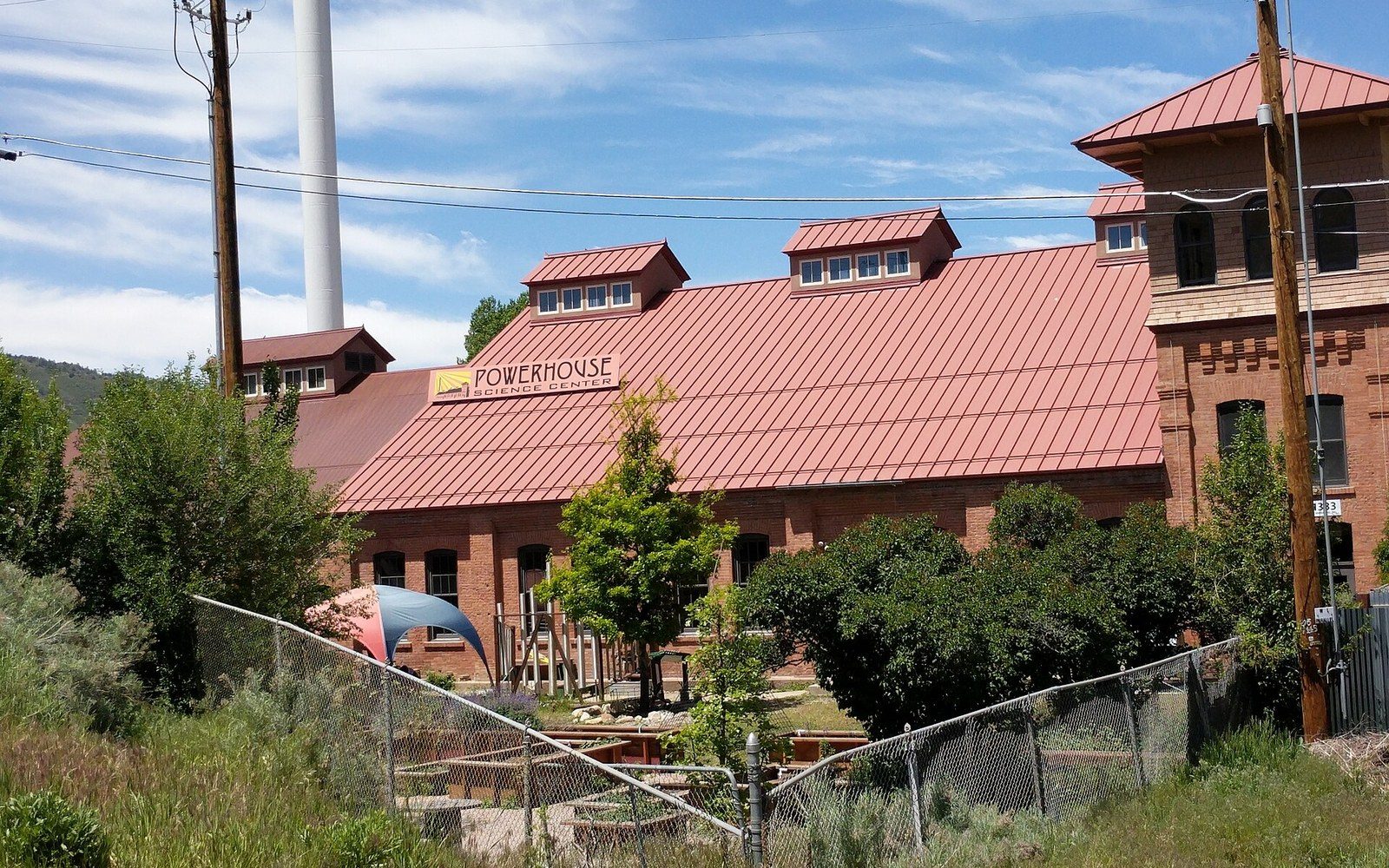
A turbine hall that outlasted its original purpose by a century
Durango's first centralized electric generating plant rose on the west bank of the Animas River in 1904, commissioned to supply a town that had been growing steadily since the Denver & Rio Grande drove its rails into the valley in 1881. The site was deliberate: river water provided both the coolant the machinery needed and direct access for construction, while the Animas itself served as a constant reminder of why the equipment had to be reliable — floods, not just demand peaks, were a planning constraint from the start.
The plant was a coal-fired steam facility, not a hydroelectric one despite its riverbank address. Coal came in by rail, and the generating equipment converted steam pressure into alternating current for distribution across town. For decades the station functioned as the backbone of Durango's electrical grid, its brick turbine hall running continuously through the mining booms and busts that shaped La Plata County's fortunes in the early twentieth century.
The building itself was utilitarian industrial architecture of its era: load-bearing brick walls, large window bays to ventilate the heat of the machinery, and an interior volume tall enough to accommodate the generating sets and the overhead crane used to service them. That spatial generosity — the sheer ceiling height of the turbine hall — would prove critical when the question of reuse eventually arose.
The plant was decommissioned as newer and larger generating capacity came online elsewhere. Rather than demolition, Durango chose adaptive reuse, and the structure became the Powerhouse Science Center ↗, a hands-on science museum that has occupied the building since the 2010s. The conversion kept the turbine hall structurally intact, making the generating floor itself the central exhibit and event space. The industrial bones — brick, steel, concrete — were retained and legible, so visitors move through a room that is simultaneously a museum gallery and a preserved record of early-twentieth-century municipal infrastructure.
The Powerhouse Science Center now serves as one of Fort Lewis College's community partners, connecting the college's STEM education mission to the broader La Plata County public. The 1904 building's survival owes something to the same economic logic that preserved much of Main Avenue's cast-iron commercial stock: replacement costs exceeded the cost of adaptation, and the bones were sound.
What the old turbine hall demonstrates, in the end, is that industrial buildings built to last — thick walls, heavy floors, structural steel capable of supporting overhead loads — tend to outlast their first purpose by a wide margin. The Animas still runs outside the west wall, indifferent to what the building now contains.