Fort Lewis College Moved to the Mesa in 1956
A site near Hesperus once held a federal fort, then a boarding school, then a college that later moved to the mesa above Durango — each transition imposed from outside the community it served.
From Military Post to Classroom
Fort Lewis was established in 1878 as a cavalry outpost during the period of Ute removal from southwestern Colorado, first at Pagosa Springs and, from 1880, at a site near Hesperus, west of present-day Durango. The Army abandoned the installation in 1891, and the federal government converted the site almost immediately into an Indian boarding school, part of the nationwide network of institutions designed to assimilate Indigenous children by separating them from language, family, and custom. The Fort Lewis Indian School operated under that logic for decades, drawing students from the Southern Ute and Ute Mountain Ute communities among others.
The school's mission shifted over time. By the early twentieth century it had become an agricultural and vocational institution, and in 1911 the federal government granted the property to the State of Colorado, which kept operations at the Hesperus site in the La Plata Mountains foothills. There it functioned as a state high school and junior college, training students in agriculture and the trades. The Hesperus campus was modest, rural, and increasingly inadequate as enrollment expectations rose after the Second World War.

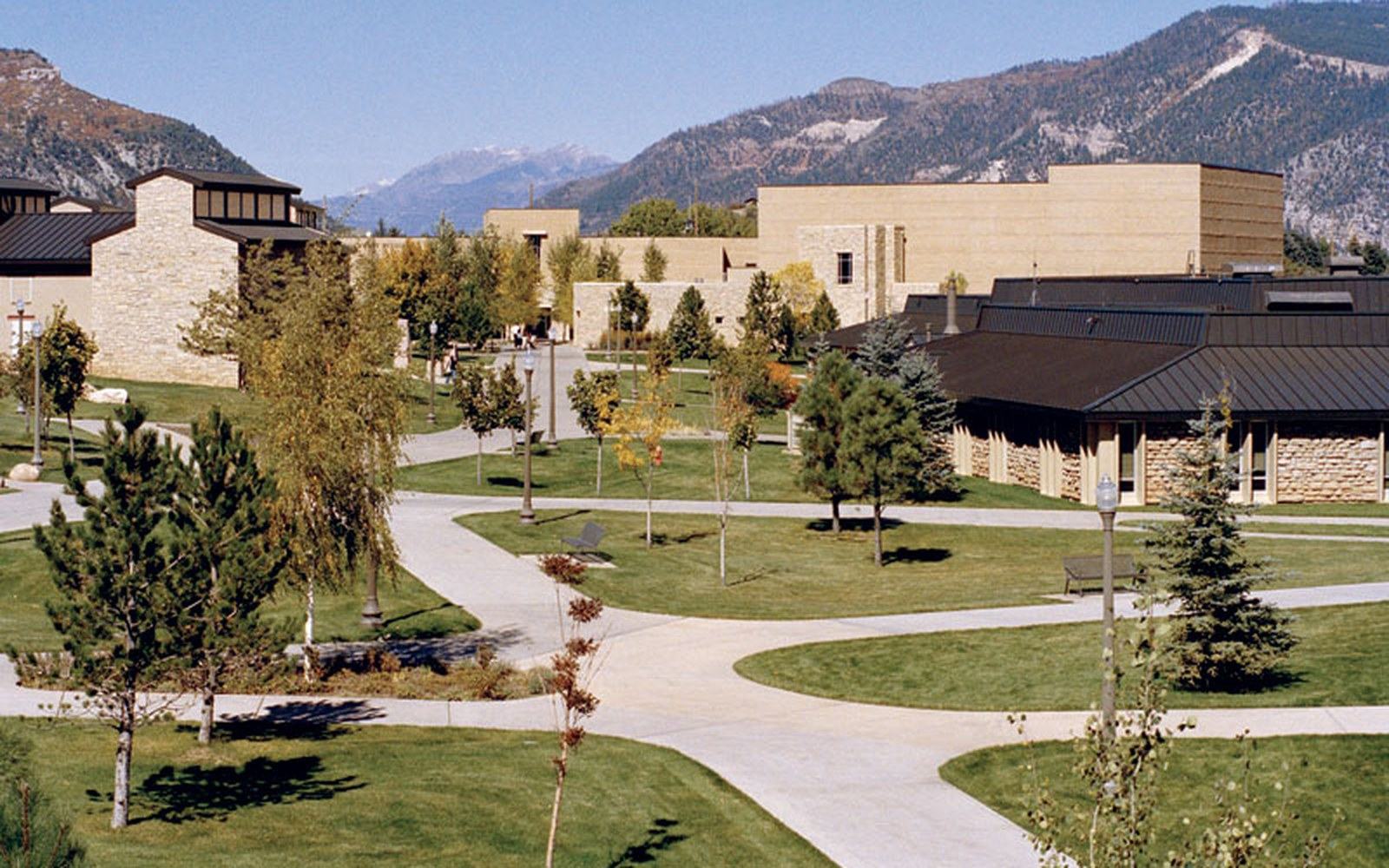
In 1956 the institution moved — to a new site on the mesa above Durango, the former municipal airport — and in the years that followed it grew into a four-year college. Construction of a permanent campus followed through the late 1950s and 1960s. The elevation — roughly 6,900 feet, with unobstructed views across the Animas Valley toward the San Juan Mountains — gave the campus a physical presence unlike any other college site in the state.
One condition survived every transition: the college's tuition-waiver policy for Native American students ↗, a legacy of the original federal land grant that required the institution to remain accessible to Indigenous students. That obligation, written into the transfer terms, has remained in force through every subsequent change in the college's name and mission.