Balcony House and Spruce Tree House: Two Different Problems of Access
Balcony House (NPS: 40 rooms) is accessible only by ladder and a crawl through a tunnel; Spruce Tree House (NPS: approximately 130 rooms) sits above Chapin Mesa and is the park's best-preserved dwelling.
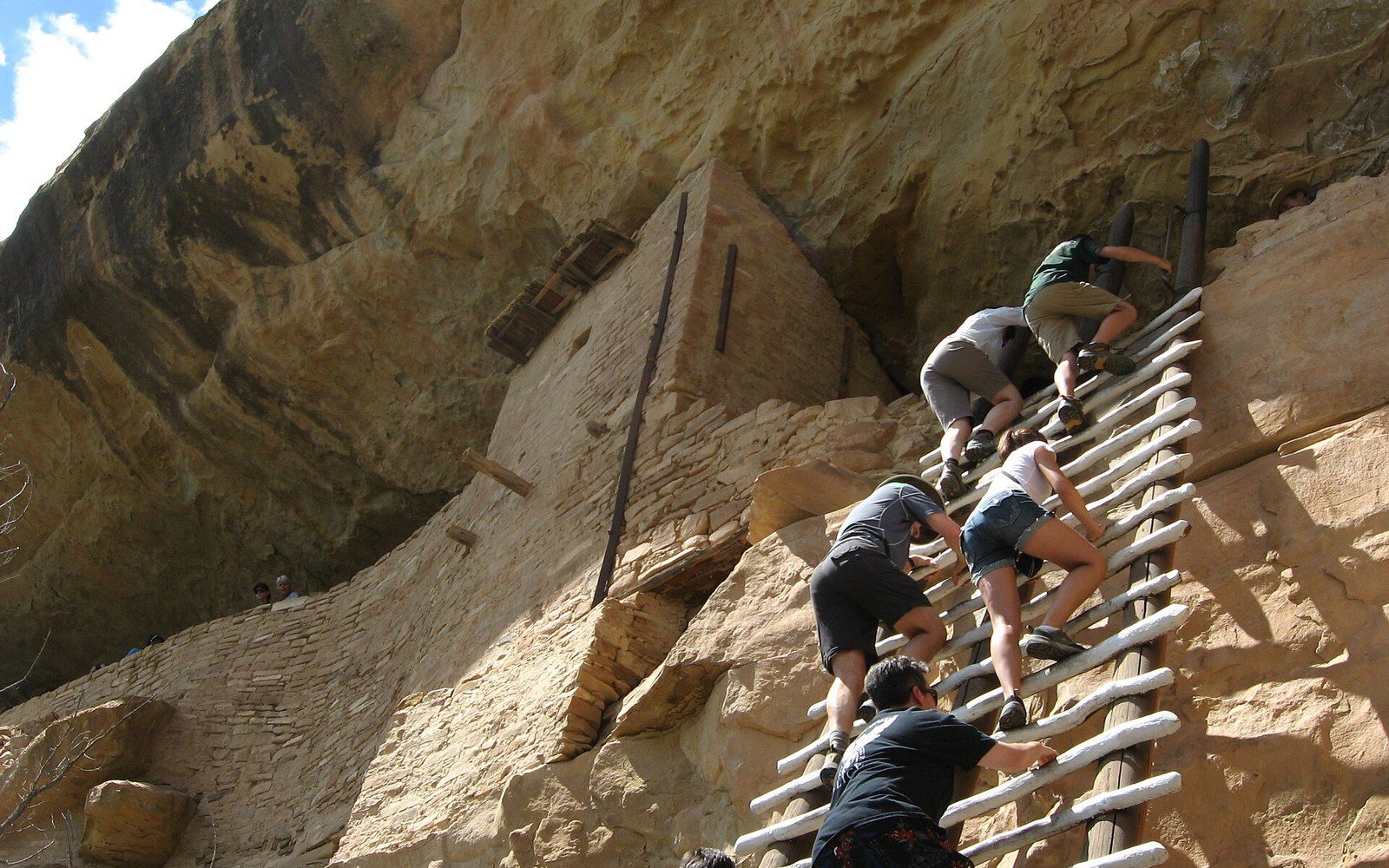
The architecture is similar; the experience of reaching it is not
Mesa Verde's two most visited cliff dwellings after Cliff Palace share a construction period, a builder tradition, and the same Ancestral Puebloan masonry vocabulary. Everything else about them differs.
Balcony House, set into a south-facing alcove on Soda Canyon, counts approximately 40 rooms by NPS survey — a mid-sized site built primarily during the thirteenth century, when the mesa's population was consolidating into the canyon walls. Spruce Tree House, above Chapin Mesa, holds approximately 130 rooms and eight kivas, also built in the late Pueblo III period, and is rated by NPS as the best-preserved cliff dwelling in the park. Room counts alone suggest two very different scales of occupation; the construction quality at Spruce Tree House, where original plaster still adheres to interior walls in places, gives archaeologists a working baseline that few other sites can match.
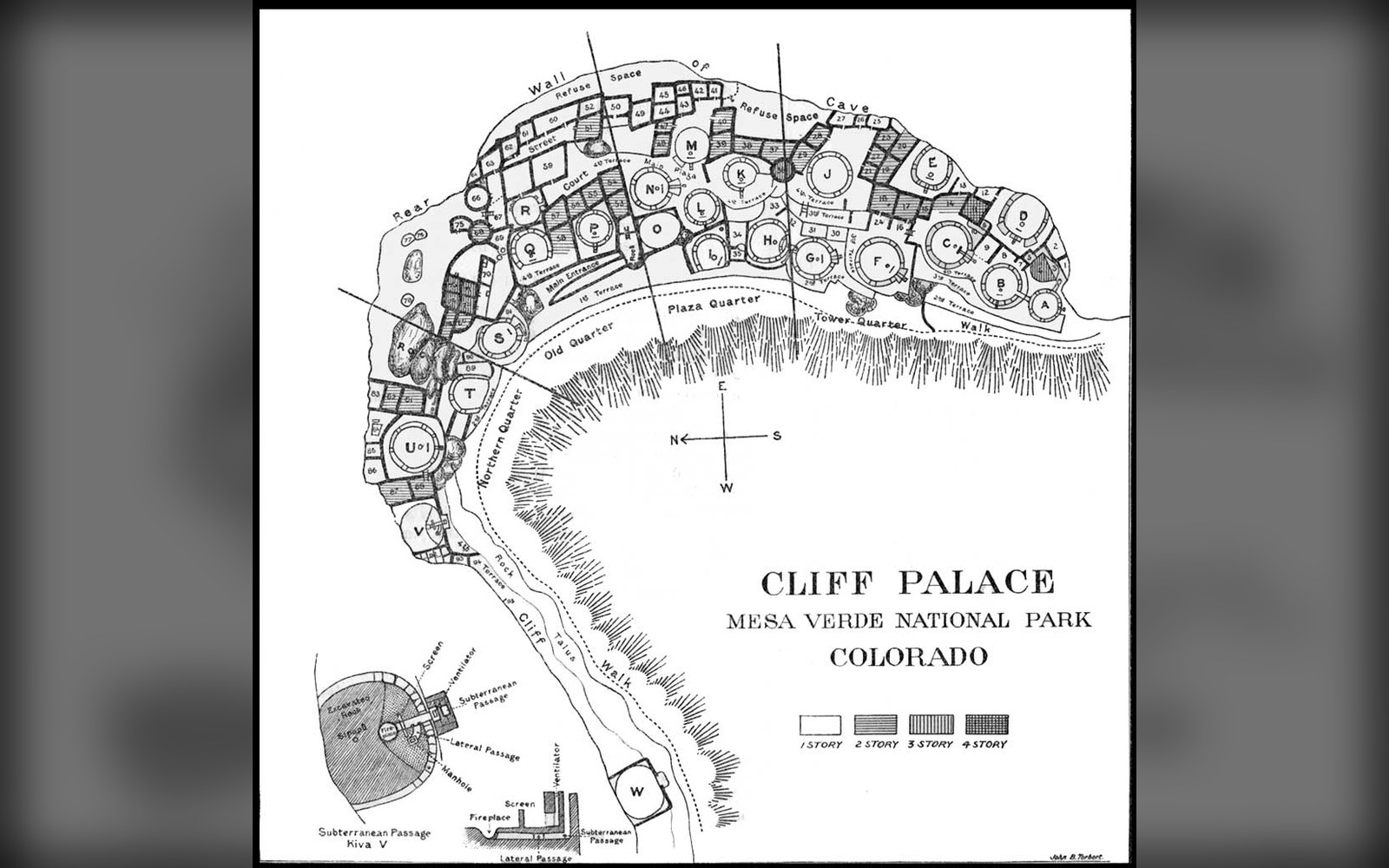
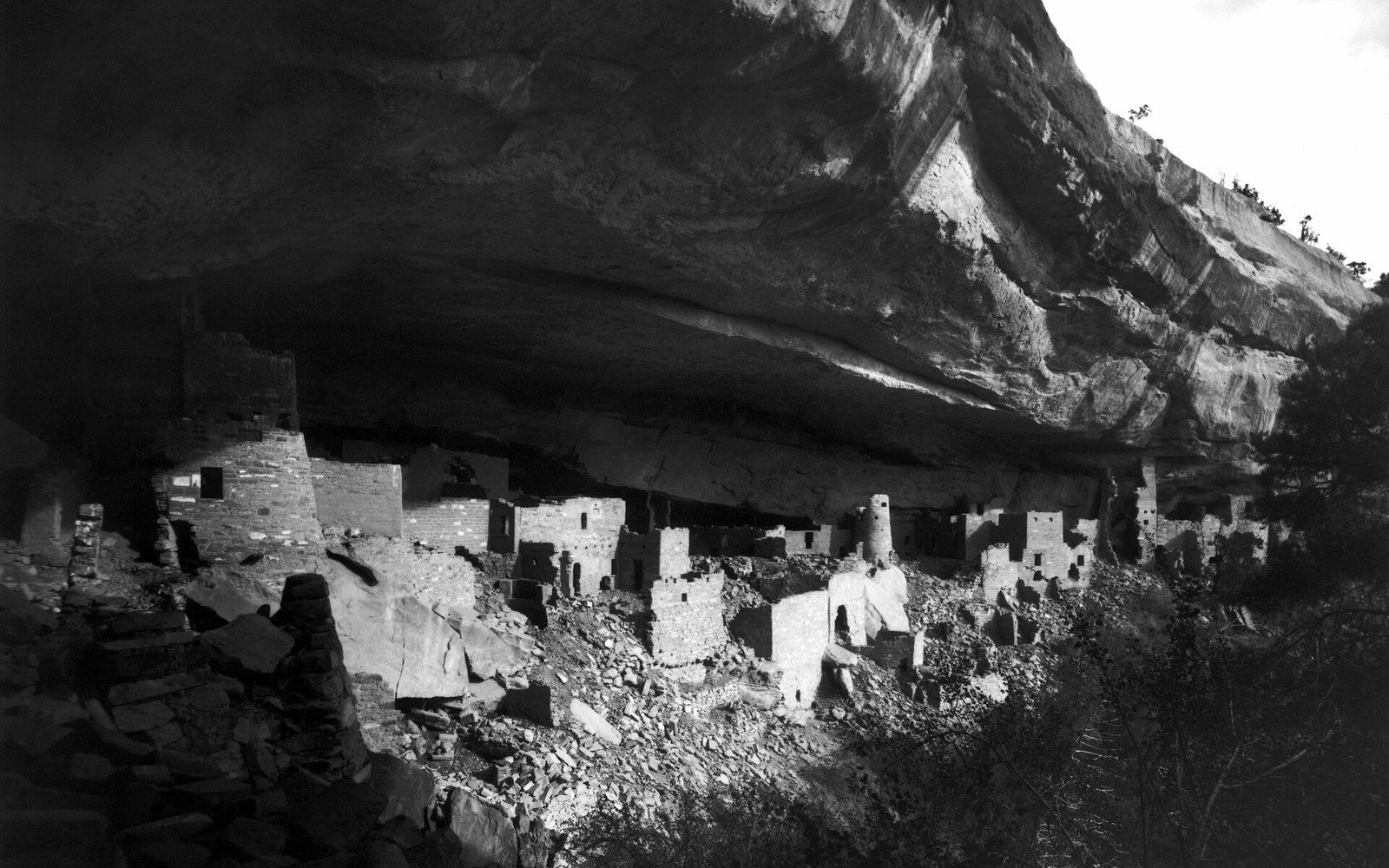
Access separates them absolutely. Reaching Balcony House requires a 32-foot ladder climb up the cliff face, a passage through a tunnel roughly 12 feet long and low enough to demand hands and knees, and a final exposed traverse along the ledge that gives the site its name — a narrow wooden balcony reconstructed over the original support beams, set above a 600-foot drop into Soda Canyon. The NPS has run ranger-led tours there since the park's early years; the route is not accidental but a deliberate echo of the only way the original inhabitants could have entered. That defensibility was architectural intention: Balcony House is among the most deliberately inaccessible dwellings on the mesa.
Spruce Tree House presents the opposite problem. Because it is accessible by a short, paved trail from the Chapin Mesa Archeological Museum and requires no ladder or physical challenge, visitor volume is sustained and concentrated. NPS manages ↗ the site carefully against compaction and surface wear; the very openness that makes it a conservation benchmark also makes it vulnerable to the traffic that proximity invites. The site has been periodically closed to independent access and placed under ranger-guided-only entry when rockfall hazard or stabilization work demands it.
Preservation challenges at each site track their exposure. Balcony House, shielded by its south-facing alcove and its relative inaccessibility, retains much original fabric; the constraint is physical — any conservation work must travel the same ladder and tunnel the visitors use. Spruce Tree House's masonry has required repeated stabilization campaigns, and ongoing geological monitoring watches the overhang above it for movement in the sandstone cap.
Together the two sites illustrate a principle the NPS applies across Mesa Verde: difficulty of access is not merely a visitor-management tool but a conservation outcome in itself.