Chimney Rock: The Easternmost Great House on the Colorado Plateau
A U.S. Forest Service monument perched between twin sandstone spires holds the most remote confirmed outpost of the Chacoan world.
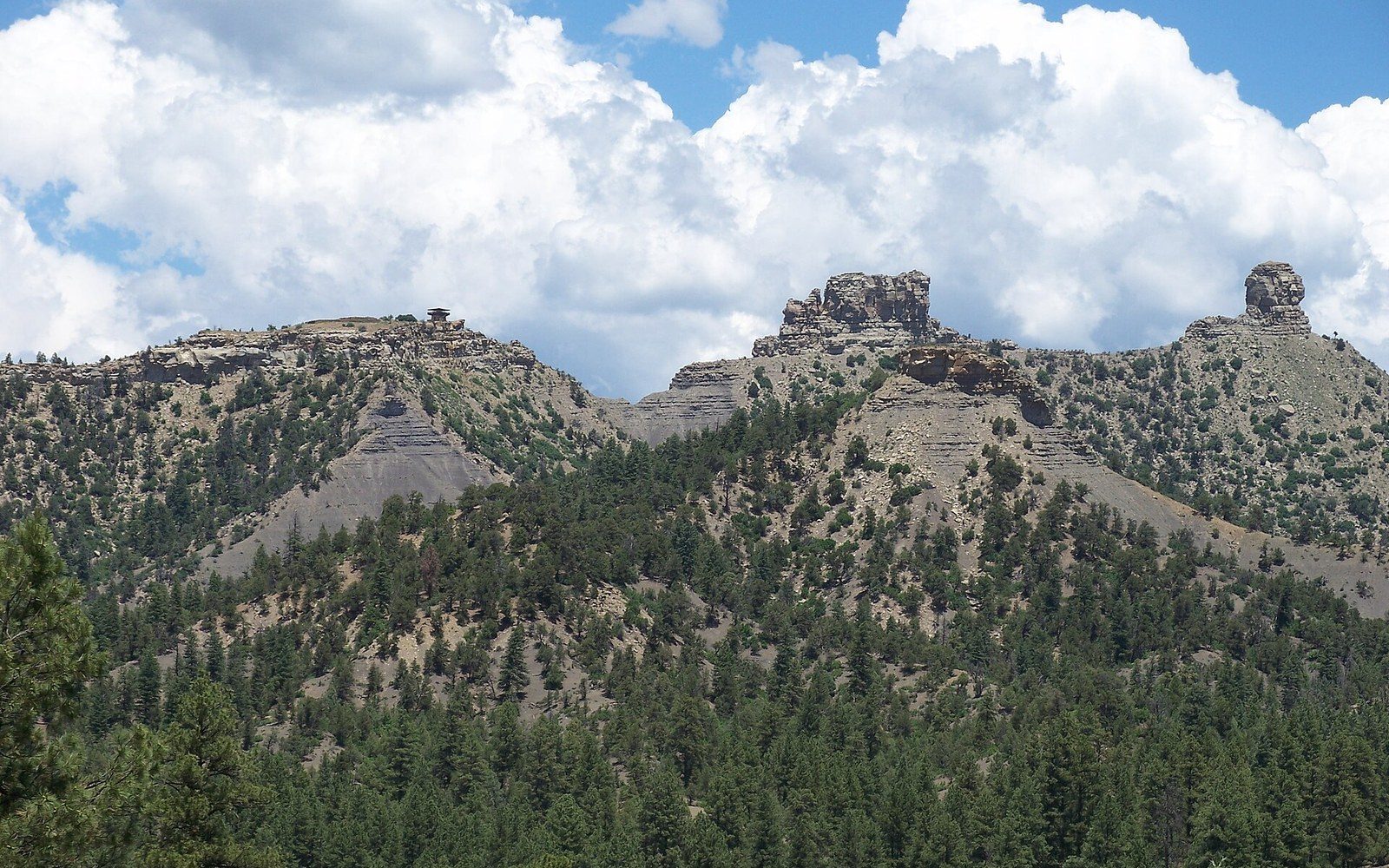
The Ridge, the Spires, and What Stands Between Them
Chimney Rock National Monument sits on a narrow mesa in the Piedra River valley of Archuleta County, roughly seventy-five miles east of Mesa Verde, at an elevation of approximately 7,000 feet. Two sandstone pinnacles — the taller rising more than 300 feet above the ridge — frame the site from above and give it its name. Between and below them, the Ancestral Puebloan builders placed the Great House pueblo, a multi-story masonry structure whose position on the ridge demands that anyone approaching it climb exposed terrain with steep drops on both sides.
Tree-ring dating — dendrochronology applied to roof timbers recovered at the site — places the Great House construction at approximately AD 1076 ↗, a date precise enough to locate Chimney Rock firmly within the Chacoan florescence of the late eleventh century. That date, and the building's architectural style, connect the site to Chaco Canyon, New Mexico, the ceremonial and organizational center whose influence spread across the Four Corners region during the same period. The Chimney Rock Great House shares the hallmarks of Chacoan construction: massive core-and-veneer masonry walls, oversized rooms intended for communal or ritual use rather than domestic storage, and a formal orientation that aligns with astronomical events. Researchers have documented that the twin spires frame a major lunar standstill — the northernmost moonrise in an eighteen-year cycle — visible from the ridge at Chimney Rock, a correspondence almost certainly not accidental.
Monument Designation and Administration
For most of the twentieth century Chimney Rock was managed as an archaeological area within the San Juan National Forest ↗ by the U.S. Forest Service. In 2012 President Barack Obama designated the site a national monument under the Antiquities Act of 1906, extending formal protection to roughly 4,726 acres around the ridge. The Forest Service remains the administering agency, distinguishing Chimney Rock from the National Park Service units at Mesa Verde and Aztec Ruins. Access is seasonal, and guided tours remain the primary means by which the archaeological structures are visited — a practical constraint driven by the ridge's narrow, exposed approach.
The site holds more than 200 recorded archaeological features, including field houses and limited habitation sites on the lower terraces below the Great House. The Great House itself, however, is what defines Chimney Rock's significance: as the easternmost documented Great House on the Colorado Plateau, it marks the outer reach of Chacoan organizational power in the eleventh century, built at altitude between twin spires that the builders appear to have regarded as inseparable from the structure's purpose.