Chama and Antonito: The Other Piece of the Three-Foot Network
The Cumbres & Toltec Scenic Railroad runs 64 miles of surviving Denver & Rio Grande main line — a companion piece to the Durango route, sharing the same Baldwin engines and the same three-foot gauge.
What the States Bought in 1970
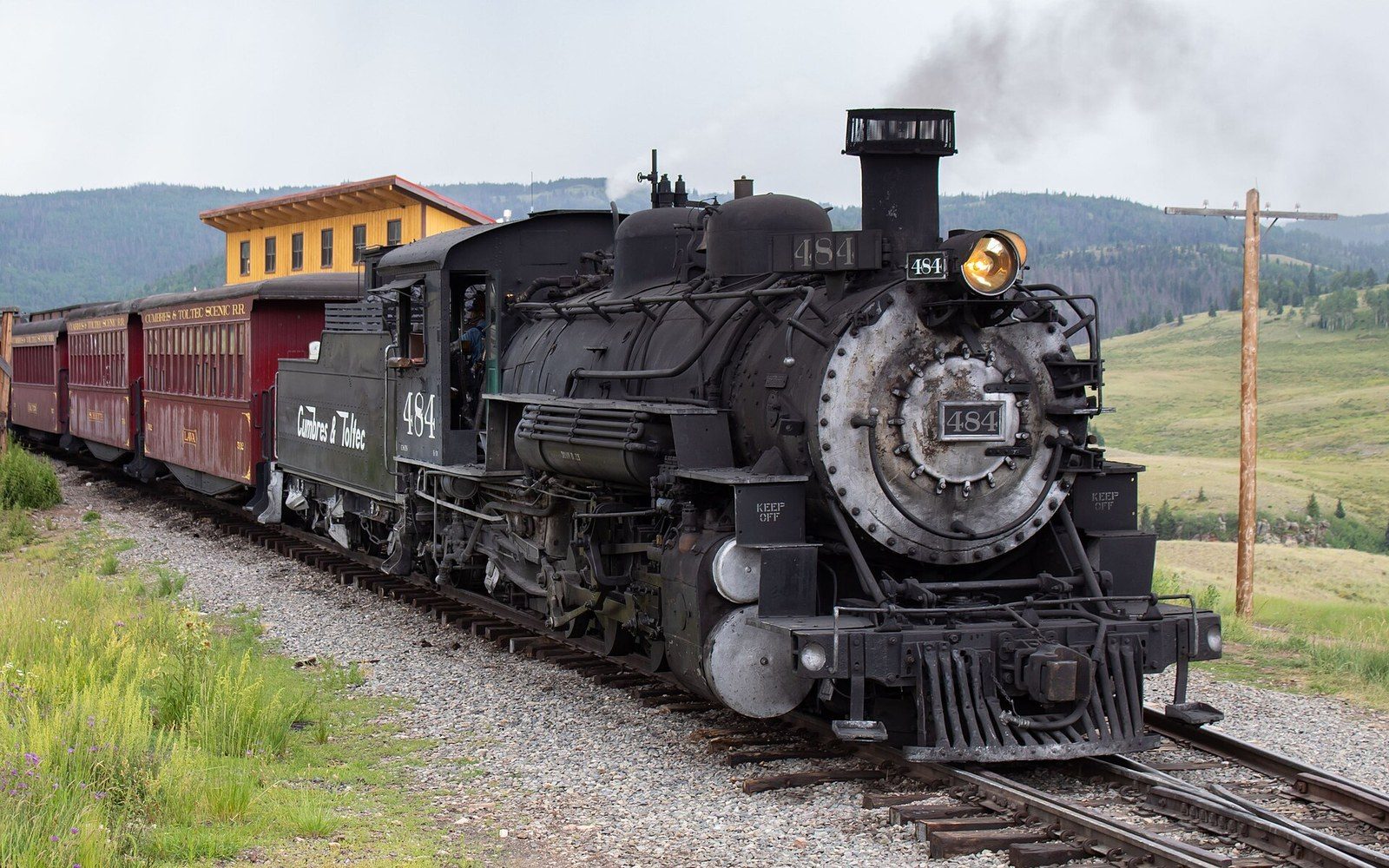
When the Denver & Rio Grande Western filed to abandon its Antonito–Chama line in the late 1960s, the track had been in place for nearly ninety years. The D&RGW had built it in 1880 as part of its San Juan Extension, the same construction push that produced the Silverton branch and established Durango as a division point. By mid-century, freight traffic had dried up and the railroad had no economic argument for keeping the line alive.
Colorado and New Mexico moved jointly to save it. In 1970, the two states purchased the 64-mile segment between Antonito, Colorado ↗ and Chama, New Mexico for $547,120 — a figure that included not just the track but the locomotives, rolling stock, and shop equipment sitting at both ends. The resulting operation, the Cumbres & Toltec Scenic Railroad, became a joint agency of the two state governments and has remained so ever since, making it one of the few publicly owned heritage railroads in the country.
Cumbres Pass and What the Grade Demands
The line's signature feature is its crossing of Cumbres Pass, which the U.S. Geological Survey ↗ records at 10,015 feet — the highest point reached by any standard steam railroad operating in the United States today. Getting there from Chama requires climbing a sustained 4-percent grade, one of the steepest on any mainline railroad in North America, up a series of curves tight enough to test the limits of a three-foot-gauge locomotive at speed. The ruling grade is no exhibition piece: it genuinely demanded the most powerful narrow-gauge steam power available, which is precisely what the D&RGW had ordered from Baldwin in the 1920s.
East of the summit, the track descends through the Toltec Gorge, a canyon of red and ochre Precambrian rock that the Rio de los Pinos carves through the high country along the state line. The gorge section has no road access and remains as remote in character as it was when work gangs laid the rail in 1880.
The Baldwin Roster and the Shared Heritage
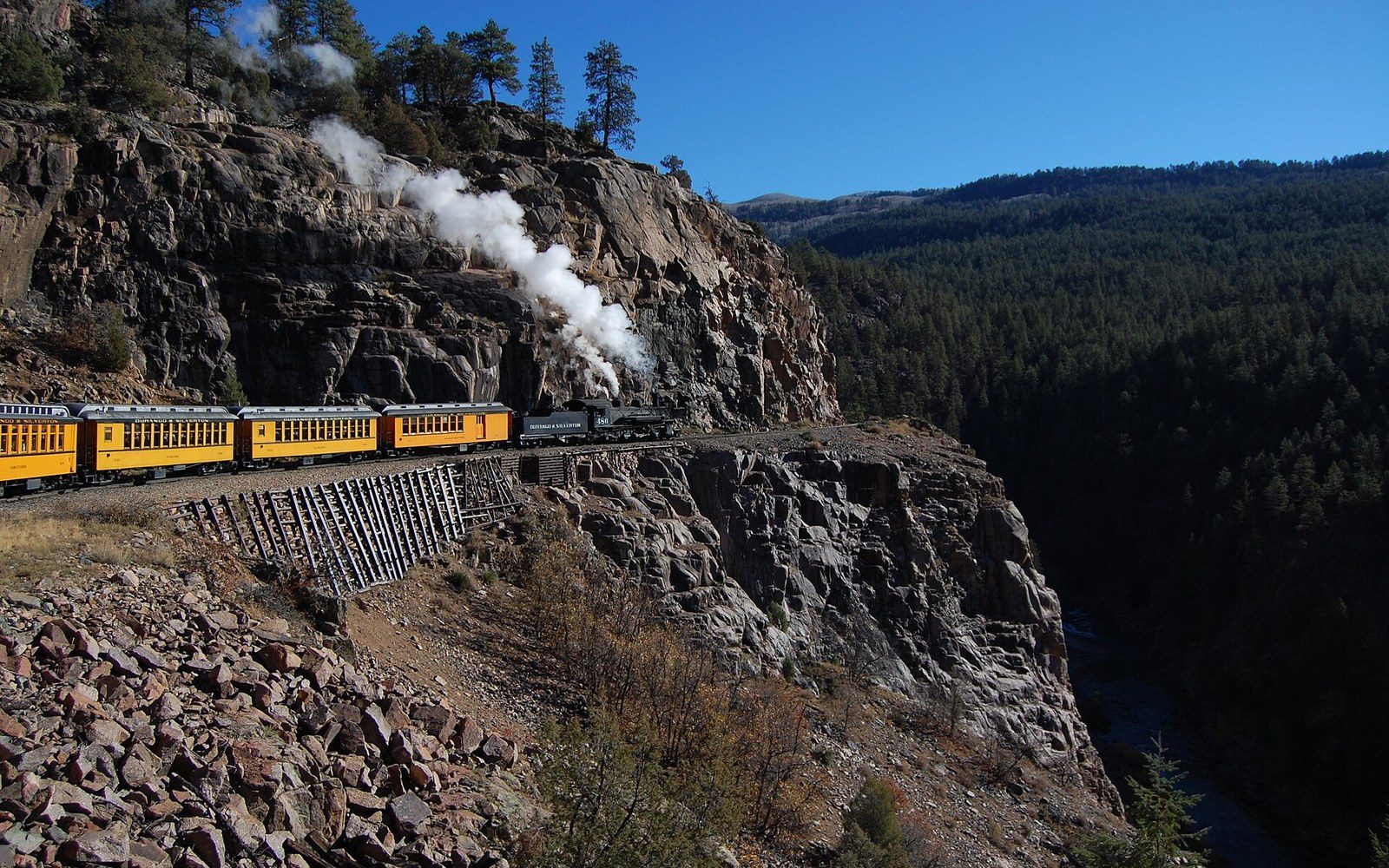
The locomotives that work the Cumbres & Toltec are K-36 class 2-8-2s, built by Baldwin Locomotive Works ↗ in 1925 — the same class, from the same production run, as the heaviest engines operating on the Durango & Silverton. The D&RGW ordered ten K-36s that year; when the states divided the surviving equipment in 1970, the K-36s went primarily to the Cumbres & Toltec, where the steeper grades and heavier tonnage requirements suited their greater tractive effort. The Durango route received the lighter K-28s for its own operation, though several K-36s have worked both lines over the decades.
The result is that the two surviving narrow-gauge railroads of the former D&RGW network operate as something close to a single preserved system — the same gauge, the same locomotive builder, the same standardized parts, and in several cases the same individual engines, which have moved between the two properties for overhaul and seasonal assignment. Shop staff at both Chama and Durango have maintained working knowledge of the same Baldwins for more than fifty years.
The Cumbres & Toltec carries no freight. Its 64 miles of track through the San Juan Mountains and across the New Mexico border exist entirely as a preserved artifact of the three-foot network that once connected Durango, Silverton, Antonito, and a dozen smaller San Juan towns into a coherent mountain railroad system. The pass crossing at Cumbres, with K-36 exhaust audible across a mile of alpine meadow, is the D&RGW's engineering legacy operating more or less as its builders left it.