They Cut a Shelf Four Hundred Feet Above the Water and Put No Railing On It
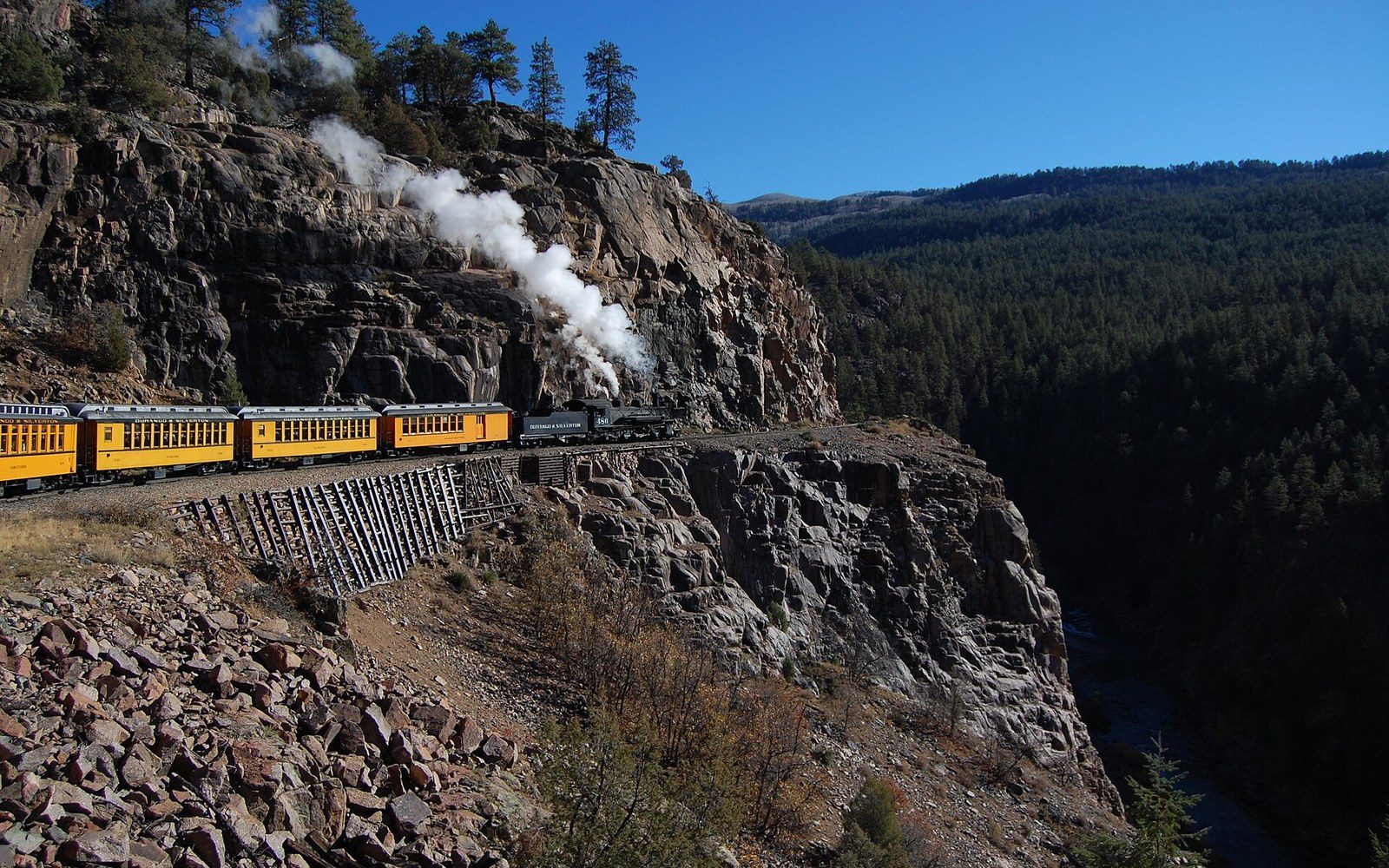
The High Line between Rockwood and Tacoma is the most exposed piece of railroad in the American Southwest — a ledge blasted from solid rock, cantilevered above the Animas River, with nothing on the downhill side but air.
The Canyon Forced the Engineer's Hand
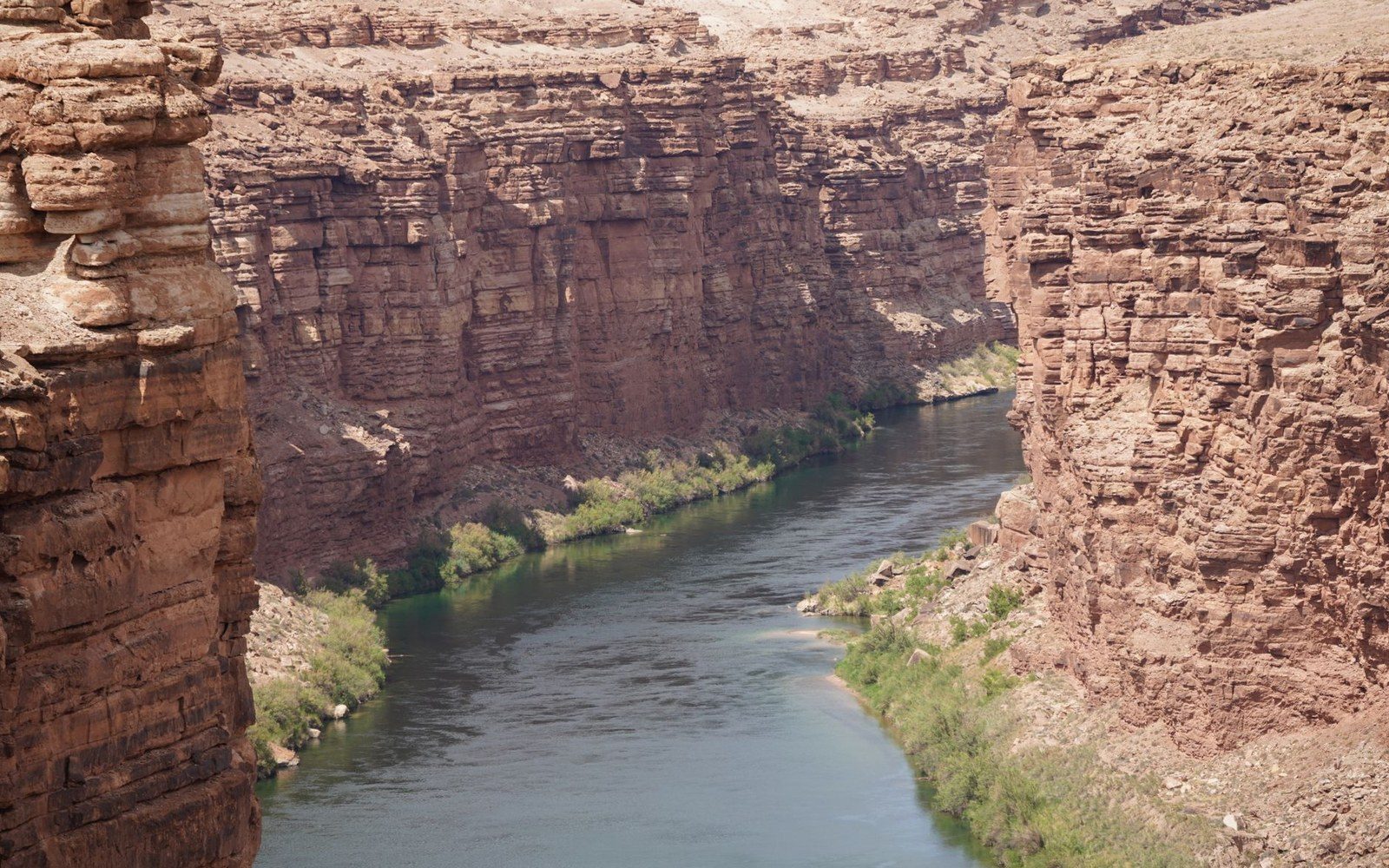
The Animas Cañon north of Rockwood, Colorado, presented the Denver & Rio Grande's construction crews with a problem that had no tidy solution. The river had spent millennia cutting a gorge through Precambrian granite and Mesozoic sandstone so narrow and so sheer that there was no valley floor to follow, no gentle grade to coax a roadbed from. The D&RG had been threading its three-foot narrow gauge through the San Juan Mountains since the early 1880s, and the engineers had grown comfortable with difficult terrain. But the upper Animas was something else — a slot barely wide enough for the water itself, with walls rising hundreds of feet from the surface.
The route north from Durango toward Silverton had been authorised and graded in stages, with the line reaching Silverton in July 1882. Getting through the cañon required a solution that had only one answer: blast a shelf into the cliff face itself, at whatever height the rock structure allowed, and lay track on it. That shelf — the passage that passengers still call the High Line — runs roughly between Rockwood, the small community at the canyon's lower entrance, and the station site at Tacoma, where a hydroelectric plant now occupies the narrow bench above the river. For much of that distance, the track sits approximately 400 feet above the Animas ↗, measured by USGS surveys of the canyon walls. The river below is not a comfort; it is white, fast, and genuinely far away.
Construction crews in 1881 and 1882 worked the cliff face from above, drilling into the granite by hand, packing black powder into the holes, and retreating before the shots opened another few feet of ledge. The spoil went straight over the edge into the river. There was no space to stockpile it, no room for a work camp at the face itself. Men were lowered on ropes to clear debris that the blast had not dislodged. The resulting shelf is, in most places, just wide enough for a single track with a few inches of clearance on each side — enough for the three-foot gauge rolling stock, but nothing more. Standard-gauge equipment could not have been built through here at any price; it was the narrow gauge's defining advantage made literal in stone.
What the Track Sits On, and What It Does Not
The roadbed on the High Line is rock-cut for most of its length, with short timber trestle sections bridging fractures in the cliff face where continuous ledge was impractical. The D&RG's standard practice elsewhere in the mountains was to shore uncertain ground with cribbing or fill, but the cañon allowed little room for either. What exists today is essentially what the 1882 crews left: a blasted shelf, backfilled in places with rock rubble and tamped ballast, carrying rail that has been relaid and upgraded over the decades but follows the original alignment almost exactly.
There is no guardrail on the downhill side. There never has been. The Durango & Silverton Narrow Gauge Railroad, which has operated the line since it was sold by the Denver & Rio Grande Western in 1981, maintains the segment under federal safety oversight, but the physical geometry of the ledge makes conventional barrier installation impractical — a railing would need to be anchored into the cliff face at the track's outer edge, which is, in most places, an overhang above nothing. Open gondola cars on the train's consist give passengers an unobstructed view down to the Animas. This is intentional; it is also genuinely vertiginous.
The gradient through the High Line section is relatively moderate by San Juan standards — the cañon's depth is achieved more through vertical wall than through elevation gain — but the narrowness of the cut means that the track curves in tight arcs to follow every indentation and projection of the cliff. A locomotive's pilot truck and trailing truck negotiate these curves while the driving wheels are still on a tangent section; the geometry is precisely why narrow gauge, with its shorter wheelbase and tighter turning radius, was the only practical choice. Baldwin Locomotive Works built the K-28 and K-36 classes that now haul the tourist trains to dimensions calculated for exactly this kind of alignment.
From a Coach Window, Northbound
Passengers boarding at the Durango depot travel through open meadow and scattered pinyon-juniper for the first dozen miles before the canyon closes around the train at Rockwood. The change is abrupt. Within minutes of Rockwood the canyon walls press in from both sides, the light narrows, and the river drops away below the left-hand windows as the track begins to climb the shelf. Northbound, the river is on the passenger's left; the cliff face is inches from the right-hand window. The sequence lasts roughly fifteen to twenty minutes at the train's operating speed, long enough for the exposure to register fully.
What passengers see to the left is approximately 400 feet of open air terminating in the Animas, which appears from this height as a white thread through dark rock. There are no trees on this section of cliff; the granite here is too steep and too bare to support them. The sensation of height is unmediated. Children frequently press to the left-hand windows; adults, more often, press back from them. The open gondolas — flatbed cars with bench seating and no roof or walls — are the most popular seats on the train and the most exposing. The D&RG ran open excursion cars on this route from the early days of tourist traffic, which the journalist Ernest Ingersoll documented in the early 1880s; the practice has never stopped.
Southbound passengers on the return run experience the same passage with the river now on their right, which, depending on seating, can be either more or less direct. The afternoon light in summer falls differently on the canyon walls, picking out the horizontal fracture planes in the granite that the blasting crews followed when they chose their line. Those fracture planes — the same geological feature that made the rock splittable — are visible as faint horizontal striations in the cliff, a record of the Precambrian forces that created the wall before anyone thought to run a railroad along it.
The High Line has no formal name in the railroad's operating timetables; it is identified by milepost, not by the label that passengers and guidebooks have attached to it for well over a century. That label has stuck because no other description is adequate. The Denver & Rio Grande built hundreds of miles of difficult mountain railroad, through passes above eleven thousand feet and across bridges over chasms that made eastern engineers flinch. None of it is quite like this: a single track, blasted from a vertical wall, four hundred feet above white water, with nothing on the downhill side but the long view to the river.